
About All Tours 3-Day ToursPrivate ToursFrom La Paz ToursFrom San Pedro ToursSunset ToursStargazing Night Tours Directions Hours & Fees
Find Tours 
Stretching across 10,582 square kilometers of the high-altitude Altiplano plateau, Salar De Uyuni contains an estimated 10 billion tons of salt sitting at 3,653 meters above sea level. Seasonal rains from December to March turn this arid basin into a massive natural mirror, while the dry months reveal infinite hexagonal salt patterns.
Find Guided ToursSalar de Uyuni is the world's largest salt flat, covering 10,582 square kilometers in southwestern Bolivia. Situated in the Daniel Campos Province of the Potosí Department, it sits at an elevation of 3,653 to 3,663 meters near the crest of the Andes Mountains. The massive dry lake measures roughly 126 kilometers long and 84 kilometers wide, resting in a semi-arid Altiplano basin with no drainage outlets.
The landscape seen today is the result of tens of thousands of years of geological transformation. Between 30,000 and 42,000 years ago, the region was submerged under Lake Minchin, a giant prehistoric body of water. This lake eventually transitioned into Paleo Lake Tauca, which reached depths of 140 meters around 13,000 to 26,100 years ago. Finally, it became Lake Coipasa between 11,500 and 13,400 years ago before drying into the current salt crust, which reaches depths of up to 130 meters.
The salt flat contains an estimated 10 billion tons of salt. Local campesinos extract less than 25,000 tons annually using traditional hand tools like picks and shovels. Beyond salt, the area holds between 50% and 70% of the world's lithium reserves, a critical mineral for electronics like smartphones and laptops.
Scientific interest in these mineral resources dates back to between 1973 and 1976 with NASA's Project ERTS. By 1988, government plans to allow the Lithium Corporation of America to extract lithium resulted in local protests. Today, the exceptionally flat surface serves an entirely different scientific purpose. International space agencies regularly utilize the expansive, unvarying plain to calibrate their satellites in orbit.

Discover the full history and cultural significance on our About page.
During the dry season, this rocky volcanic island rises from a flat sea of white salt. A 15-minute trail leads to the summit, passing centuries-old cacti that stand several meters tall. Reaching the top provides a 360-degree panoramic view across the 10,582-square-kilometer desert.
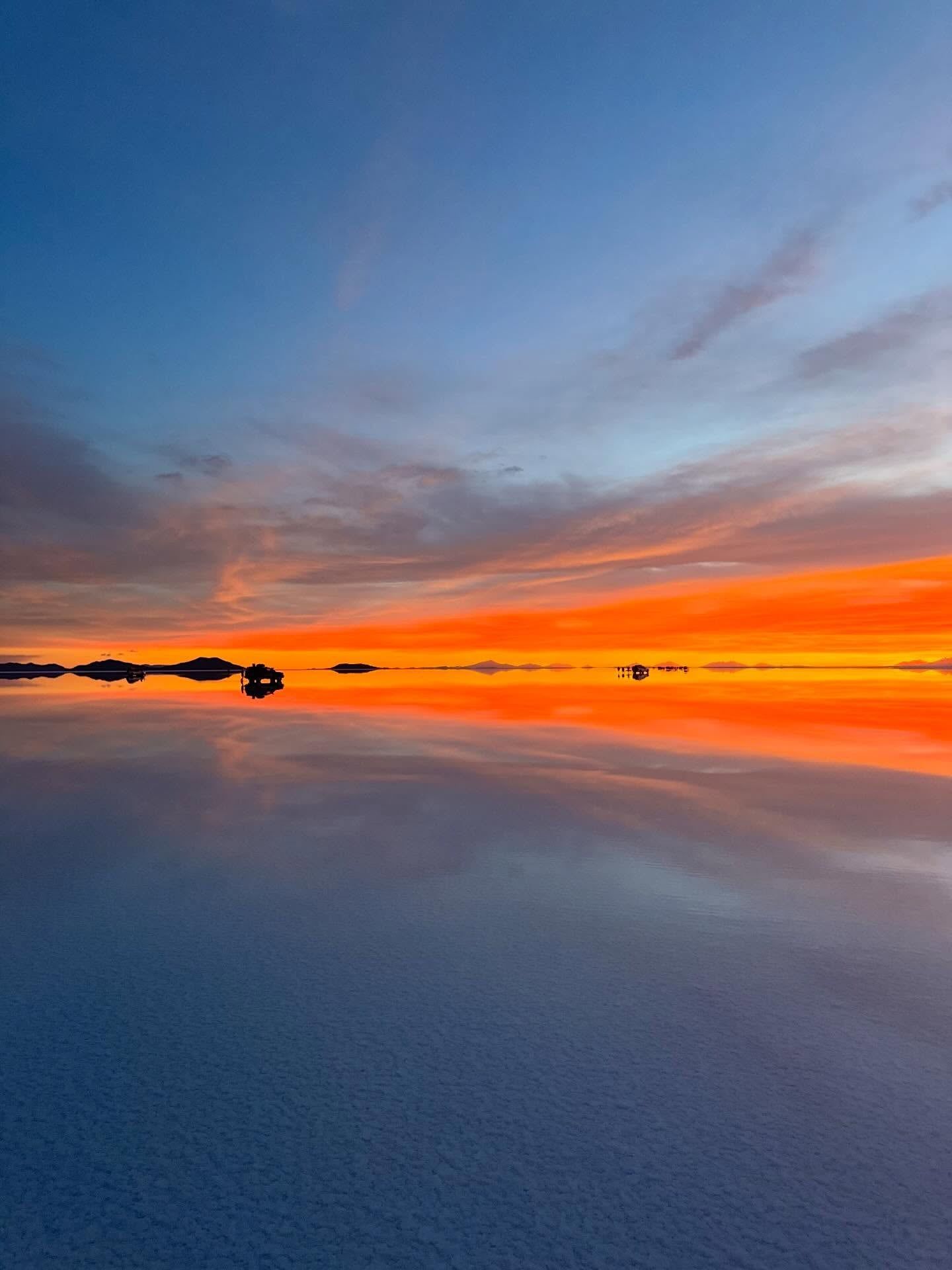
Between December and March, seasonal rains leave a thin layer of water over the salt crust. This transforms the terrain into the world's largest natural mirror. The shallow water perfectly reflects clouds and stars, creating the visual illusion of walking through space.
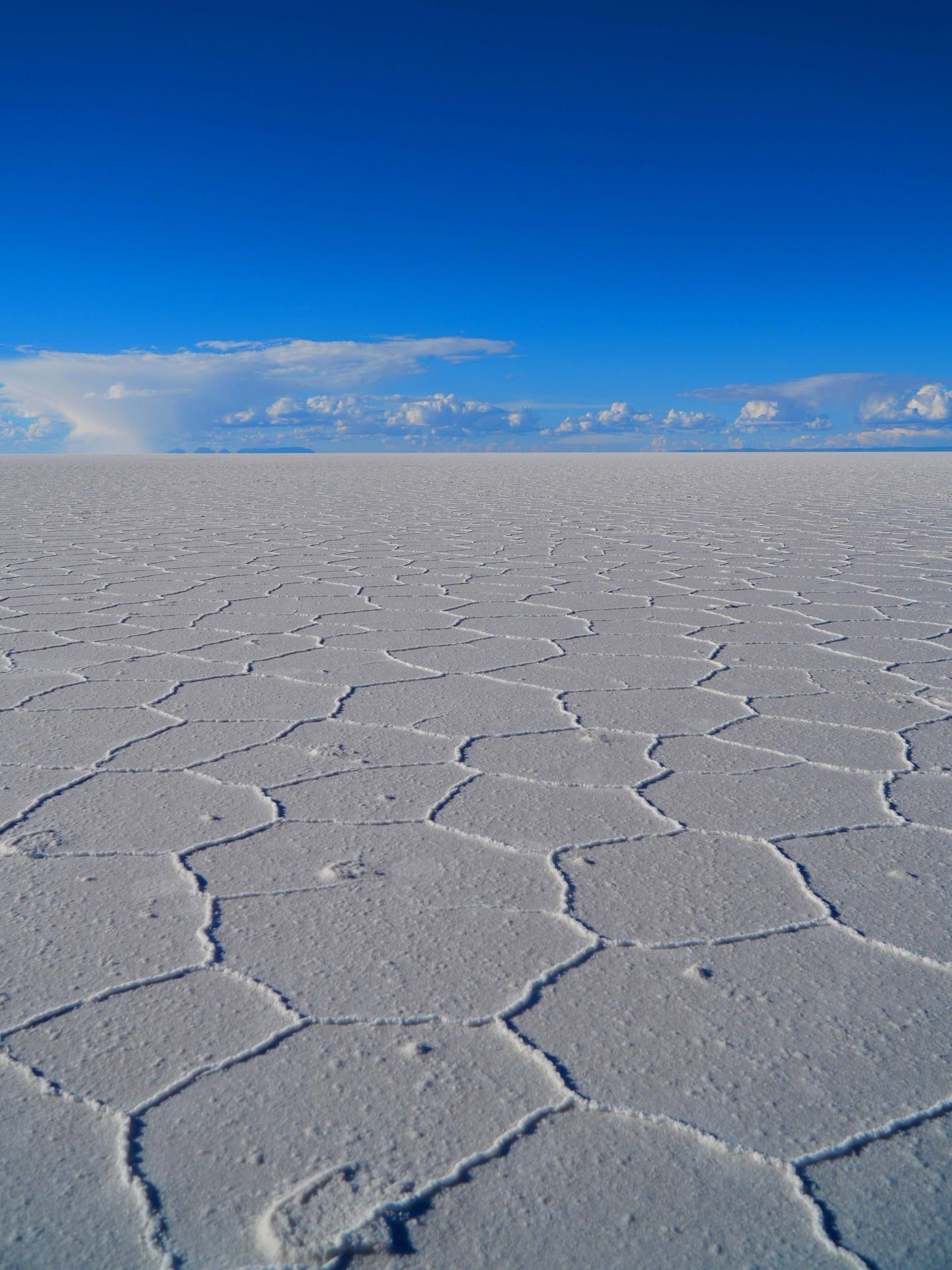
The endless white horizon of the dry hexagonal salt tiles removes all visual depth cues. Photographers can lie flat on the ground and use small props, such as toy dinosaurs or boots, to capture highly creative scale illusions across the vast landscape.
Just outside Uyuni town sits an eerie playground of hollowed-out, rusted trains. Abandoned in the 1940s, these historic locomotives once transported gold, silver, and tin to Pacific ports. Today, visitors can freely explore and photograph the graffiti-covered metal ruins scattered across the high-altitude plateau.
Hand-picked tours with free cancellation and verified reviews
 Free Cancellation 72h
  72h
72h  Free Cancellation
  Free Cancellation 72h
  Free Cancellation 10h
  Free Cancellation 9h
  Free Cancellation 8h
  Free Cancellation 10h
 The ideal time to visit Salar de Uyuni depends entirely on your visual preferences. December to April provides the famous mirror effect, while May to November offers dry, highly accessible conditions.
Falling within the dry season, this period offers stable weather and clear blue skies. Visitors can easily access all areas and photograph the striking hexagonal salt crust patterns.
The wet season creates a massive mirror effect reflecting the sky. However, heavy water accumulation in January and February makes the surface impassable, restricting vehicle access to Incahuasi Island.
March and April conclude the wet season with lingering surface water, while May introduces dry conditions. This timeframe provides a balance of sky reflections and improved vehicle accessibility.
This dry period ensures clear skies and solid ground for exploring the expansive salt flats. However, June and July bring extremely freezing temperatures, particularly near the Chilean border.
The Salar de Uyuni is an open natural space with no official gate-specific opening hours. Access is largely dictated by guided tour schedules, which operate from early morning to late evening. Standard one-day tours generally begin around 10:00 AM and conclude by 5:00 PM to align with overnight bus arrivals and departures. Multi-day expeditions maximize exploration time, often requiring early starts with breakfast served between 5:00 AM and 7:00 AM.
| Category | Price |
|---|---|
| Salar de Uyuni General Entry | Free |
| Incahuasi Island Entrance | 30 BOB (approx. $4 to $5 USD) |
| Eduardo Avaroa National Reserve Entrance | 150 BOB |
| Polques Hot Springs | 6 BOB |
| Public Bathrooms | 6 BOB per use |
Tour operators do not include local entrance fees in their base prices. All site admissions must be paid in cash using only Bolivian Bolivianos, as US dollars are not accepted at the gates. Furthermore, US citizens must pay a $160 USD tourist visa fee on arrival at the border and provide two ID-sized photos.
For complete schedules and ticket prices, visit our Hours & Fees page.
Most travelers reach the salt flats by traveling the 550 kilometers from La Paz to the town of Uyuni. Access to the actual 10,582-square-kilometer salt flat then requires a 4x4 guided tour.
📍 Daniel Campos Province, Potosí Department, Bolivia
Overnight buses depart from the La Paz terminal between 8:00 PM and 9:00 PM. They arrive in Uyuni between 6:00 AM and 8:00 AM the following morning. Major operators include Todo Turismo, Trans Omar, and Panasur. Travelers should select a fully-reclining cama seat rather than a semi-cama option to ensure better sleep during the overnight transit.
Boliviana de Aviación operates government-owned flights from La Paz approximately once every three days. The plane lands at the Uyuni airport, which sits just ten minutes away from the main town center. Upon landing, travelers can hire a taxi for the short transfer. A taxi ride costs a maximum of $5 USD or 35 BOB for the entire vehicle.
This route requires a four-hour bus ride from La Paz to the city of Oruro. From the Oruro station, passengers board a train for the remaining six to seven hours to Uyuni. The train line currently operates four times weekly. It also connects further south to the towns of Tupiza and Villazon for those continuing their transit.
For detailed transport options and routes, visit our Directions page.
ATMs are entirely absent along the remote multi-day routes. Local attractions, village shops, and public bathrooms do not accept US dollars or credit cards. Carry plenty of small change to cover specific costs, such as the 150 BOB national reserve entry and 6 BOB bathroom fees.
The highly reflective white salt crust combined with intense solar radiation at 3,650 meters causes severe eye strain. High-quality sunglasses are mandatory for preventing temporary blindness. You must also apply factor 50 sunscreen repeatedly to all exposed skin throughout the day to avoid severe sunburn.
Freezing Altiplano temperatures drain camera and phone batteries incredibly fast. Store your electronics in a thermal bag or keep them close to your body to preserve their charge. Additionally, pack your gear in ziplock bags to shield it from corrosive salt dust and high humidity.
The rapid ascent from the 3,650-meter salt flats to the 5,000-meter geysers often triggers acute altitude sickness. Spend at least two to three days acclimatizing in nearby cities like La Paz or Sucre beforehand. Carry specialized altitude medication or local coca leaves to help manage symptoms.
The highly corrosive saltwater present during the wet season will quickly ruin standard shoes. Walking barefoot on the wet salt crust can also severely irritate your skin. Bring lightweight plastic rain boots, and always rinse your footwear with fresh water immediately after your tour.
Multi-day tours frequently rely on natural outdoor toilets in remote desert areas. Pack a roll of biodegradable toilet paper in your daypack for these stops. A small flashlight is equally crucial, as many basic overnight shelters lack electricity or shut off their generators early in the evening.
Rising to 5,321 meters, this dormant volcano features a multi-colored summit and a challenging day hike to a 4,724-meter viewpoint. At the base, the Coquesa and Chantani museums house ancient ceramics and well-preserved mummies.
Situated at an extreme 5,000-meter altitude, this geothermal field contains steaming sulfurous vents and boiling mud pools. Travelers watch thick steam clouds rise into the freezing morning air, showcasing the active geological forces of the region.
This striking red lagoon serves as a major high-altitude habitat for thousands of grazing pink flamingos. The bright waters contrast sharply with white borax deposits and surrounding volcanic peaks, yielding a highly photogenic landscape.
Read what travelers share about their experience visiting Salar de Uyuni — from practical tips to personal highlights.


You can take a 10 to 12-hour overnight bus, which costs $15 to $25 USD and arrives between 6:00 AM and 8:00 AM. Alternatively, Boliviana de Aviación operates a 1-hour flight from La Paz to Uyuni airport for $89 to $150 USD. Taking a 4-hour bus to Oruro followed by a 6 to 7-hour train ride is another option costing $5 to $17 USD.
A basic 1-day tour typically costs between $30 and $50 USD per person. For a comprehensive 3-day, 2-night group trip, prices generally range from $150 to $200 USD, covering shared 4x4 transport, basic accommodation, and meals. You will also need local currency to pay separate park entrance fees, which are not included in the base price.
Yes, all local entrance fees must be paid in Bolivian Bolivianos, as US dollars and credit cards are not accepted. You will need 30 BOB for Incahuasi Island, 150 BOB for the Eduardo Avaroa National Reserve, and 6 BOB for the Polques hot springs. It is also wise to carry small change, since public bathrooms cost about 6 BOB per use.
The wet season from December to March creates a thin layer of water over the salt crust, producing a massive mirror effect that perfectly reflects the sky. If you prefer stable weather and want to see the hexagonal salt crust patterns, the dry season from May to November is ideal. Keep in mind that heavy rain in January and February can make certain areas completely impassable for vehicles.
You must dress in highly adaptable layers, including a thermal base, a warm mid-layer, and a windproof outer shell to handle extreme temperature shifts. Essential gear includes UV-blocking sunglasses, SPF 50+ sunscreen, a high-capacity power bank, and extra camera batteries. If visiting during the wet season, bring lightweight plastic rain boots to protect your feet from the highly corrosive saltwater.
Specialized operators in Uyuni town offer wheelchair-friendly tours using modified 4x4 vehicles equipped with lifts and secure spaces. These specialized tours allow mobility-impaired visitors to safely explore the salt flats and travel to the northern edge near Tunupa Volcano. Standard group tours use regular 4x4 vehicles where folding wheelchairs must be stored in the trunk, requiring manual transfers.
Budget tours typically use very basic, unheated dormitories with shared bathrooms where nighttime temperatures can drop below freezing. Upgrading your booking is highly recommended to secure a room in a salt hotel that features private rooms, heating, and reliable hot showers. Always get confirmation of your accommodation details in writing before paying the tour operator.
The salt flat sits at 3,650 meters above sea level, and the 3-day tour reaches up to 5,000 meters at the Sol de Mañana Geysers. At these elevations, visitors commonly experience altitude sickness symptoms like headaches, nausea, and fatigue. You should acclimatize in nearby cities for two to three days and carry specialized altitude medication or coca leaves to manage symptoms.
Browse verified tours with free cancellation and instant confirmation.
Find Tours